
Assess
Map the trigger, stages, owners, information, decisions, and pain points.
R&D OPERATIONS
A practical framework for connected work
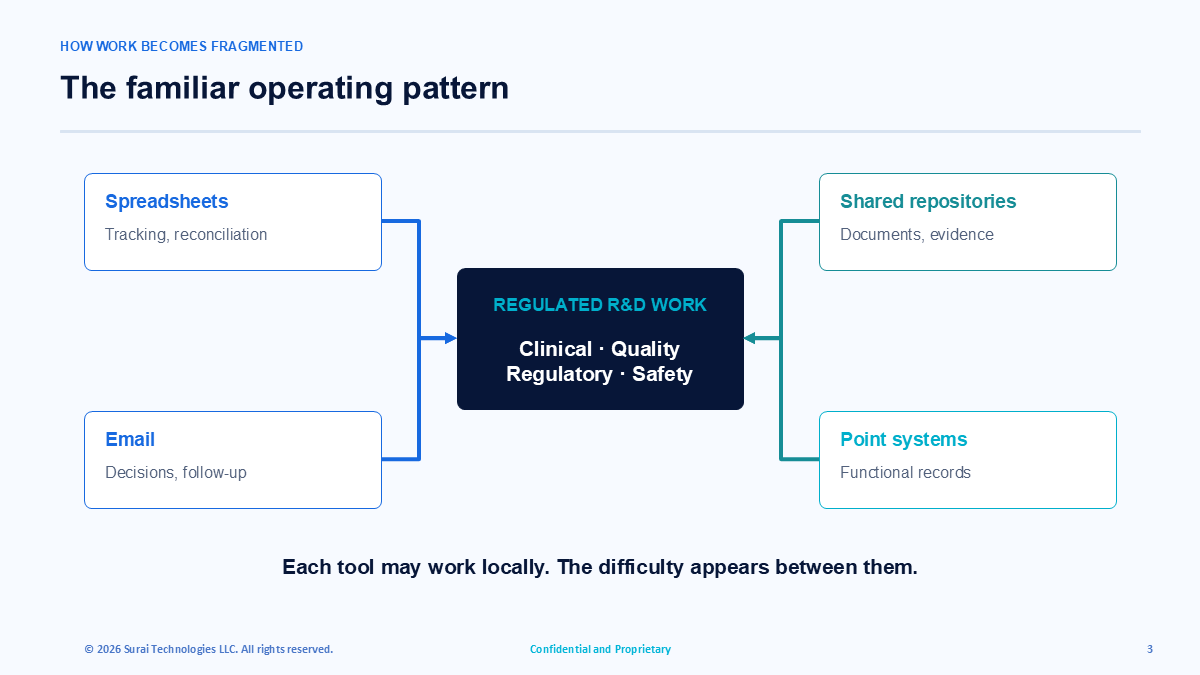
Growing biotech organizations often rely on spreadsheets, email, shared repositories, and disconnected applications to coordinate regulated R&D work. As programs expand, these tools can make ownership unclear, separate decisions from supporting evidence, and limit operational visibility.
THE OPERATING PATTERN
Spreadsheets, email, repositories, and specialized applications can each work well for an individual purpose. Difficulty develops where work crosses their boundaries.
Status may differ across trackers. Decisions may remain inside email threads. Evidence may sit apart from the record it supports. Teams then spend more time reconciling, copying, reminding, and reconstructing context.
WORKFLOW DIAGNOSIS
Apply these questions to one cross-functional workflow before defining technology requirements.
What event starts the work, and does the organization recognize it consistently?
Who remains accountable for moving the work forward and closing it?
What records, evidence, and context does the team need?
Where does the team capture decisions, rationale, and approvals?
How does the organization make actions, exceptions, and overdue work visible?
OPERATING MODEL
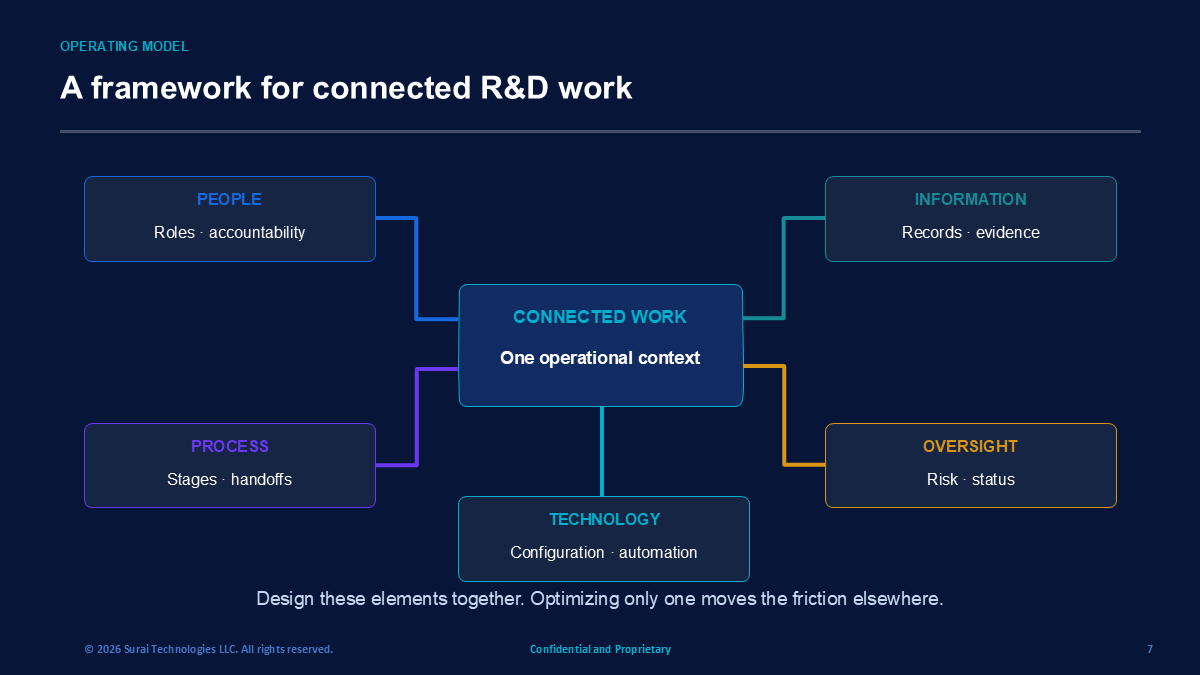
Improvement requires a shared operational context across people, process, information, technology, and oversight. Optimizing only one element moves the friction elsewhere.
GOVERNED AI
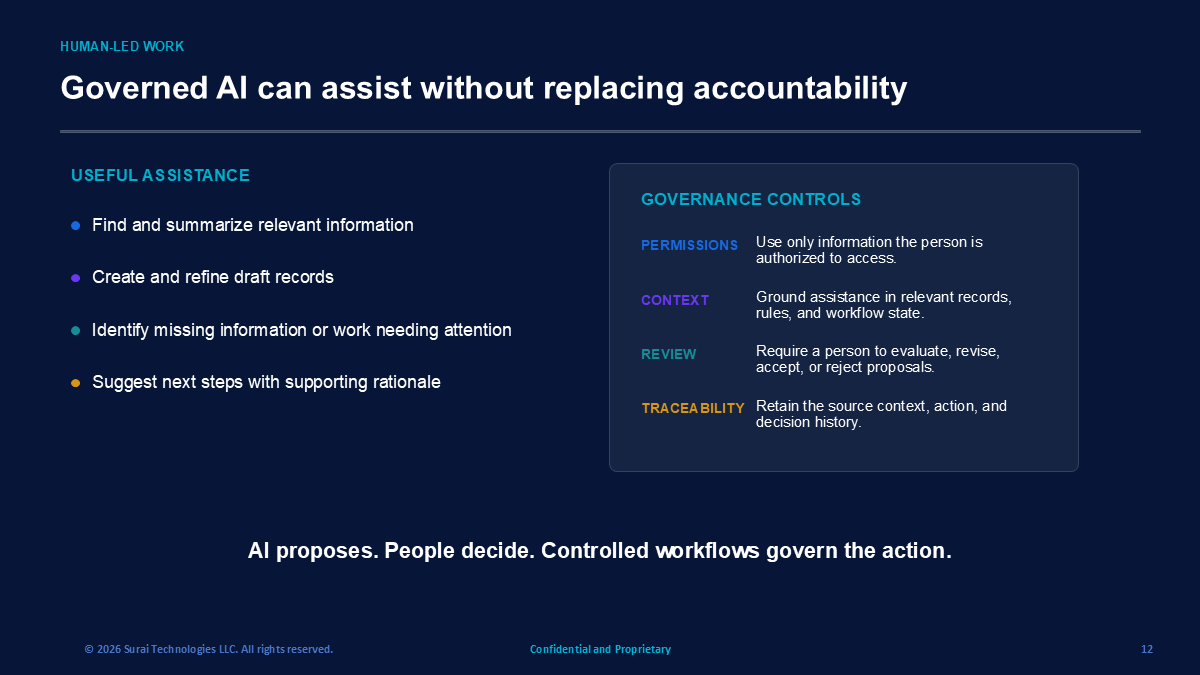
AI can help users find and summarize information, prepare draft content, identify missing information, and suggest next steps with supporting rationale.
Permissions, relevant workflow context, human review, and traceability should govern that assistance. People remain responsible for evaluating proposals and authorizing controlled actions.
A 90-DAY STARTING POINT
Map the trigger, stages, owners, information, decisions, and pain points.
Define the future process, oversight needs, success measures, and pilot scope.
Adapt the enabling tools, run the pilot, collect evidence, and refine the model.
CONTINUE THE CONVERSATION
Explore where clearer processes, connected information, and practical technology decisions could reduce manual coordination.